

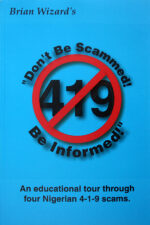



Don’t Be Scammed! Be Informed! by Brian Wizard takes readers inside the deceptive world of Nigerian 419 and advance-fee fraud through real-life stories, correspondence, and the experiences of people who found themselves targeted by professional scammers.
Rather than simply listing warning signs, the book shows how scams unfold step by step—how trust is established, how emotions such as compassion, hope, fear, and greed can be exploited, and how an innocent conversation can gradually become a costly financial trap. Wizard also examines the emotional pressure placed on victims and the difficulty some face in recognizing a fraud once they have become deeply invested in it.
Through four major scam stories, readers encounter several different forms of fraud:
“Beware of the Reload” follows a woman who lost more than $12,000 after scammers used religion, compassion, and the story of a family in need to gain her trust. Her experience develops from victimization into an effort to understand the scam and help warn others.
“Beware of the Classified Ad Scam” explores fraud involving an advertised item for sale, bogus payments, and the dangers that can arise when seemingly legitimate checks or financial transactions turn out to be fraudulent.
“Beware of the Romance Scam” looks at relationships formed through online chat rooms and the danger of trusting someone whose identity, location, intentions, and personal story may be entirely fabricated. One case follows a woman asked by an online acquaintance to cash $5,000 in postal money orders and send the proceeds to Nigeria.
“Beware of the 419 Employment Scam” shows how an attractive overseas job opportunity can become an advance-fee scheme, with promises of generous pay and benefits followed by demands that the supposed employee first send money for processing or other expenses.
Combining personal accounts with Brian Wizard’s commentary as an Anti-419 activist, Don’t Be Scammed! Be Informed! is designed around one central idea: the strongest defense against a convincing scam is recognizing how it works before becoming its next victim.
Read the stories. Recognize the tactics. Share what you learn—and don’t be scammed. Be informed.